


Introduction to CE
The CE mark is a safety certification mark, which is regarded as the key for manufacturers to open and enter the EU market. All products with the CE mark can be sold in the member countries of the EU without meeting the requirements of each member country, thus realizing the barrier-free circulation of products within the EU member countries.
CE is the abbreviation of the French Communate Europene, which means the European Community. The European Community later evolved into the European Union, abbreviated as the European Union.
In the European market, the CE mark is a compulsory certification mark. No matter the products produced by enterprises in Europe or those produced by other countries, if they want to circulate freely in the European market, they must be affixed with the CE mark to show that the products meet the basic requirements of the EU Directive "New Methods for Technical Coordination and Standardization". This is a mandatory requirement of EU laws for products.
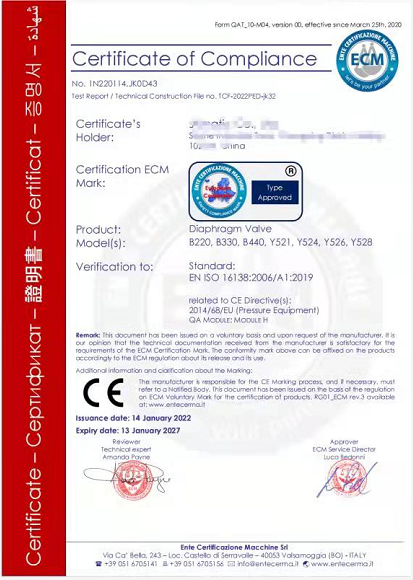
Technical documents to be prepared for CE certification
1. Product instructions
2. Safety design document (key structure diagram)
3. Product technical conditions and establishment of technical data
4. Product electrical schematic diagram, circuit diagram and block diagram
5. List of key components or raw materials (select products with CE certification)
6. Xeroxed copies of complete machine or component certification
7. Other documents
CE certification classification
Mechanical equipment CE certification (MD)
Low voltage product CE certification (LVD)
Electromagnetic compatibility CE certification (EMC)
CE certification of construction products (CPR)
Pressure vessel CE certification (PED)
Other products such as gas stoves, kitchen appliances, etc
You may also interested in the following testing/calibration items?
24 hours of advisory telephone: 086-135-0648-0092

断口形貌分析 |

微区成分定性分析 |

化学成分定量分析 |

金相分析 |
|---|---|---|---|

机械性能测试 |

晶间腐蚀测试 |

焊接工艺评定 |

涂镀层厚度检测 |

盐雾测试 |

无损检测 |
晶间腐蚀测试 |

更多检测/校准项目 |
